
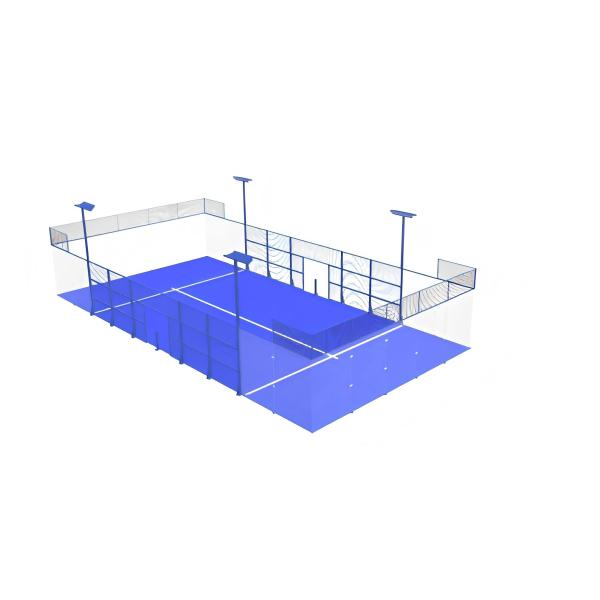
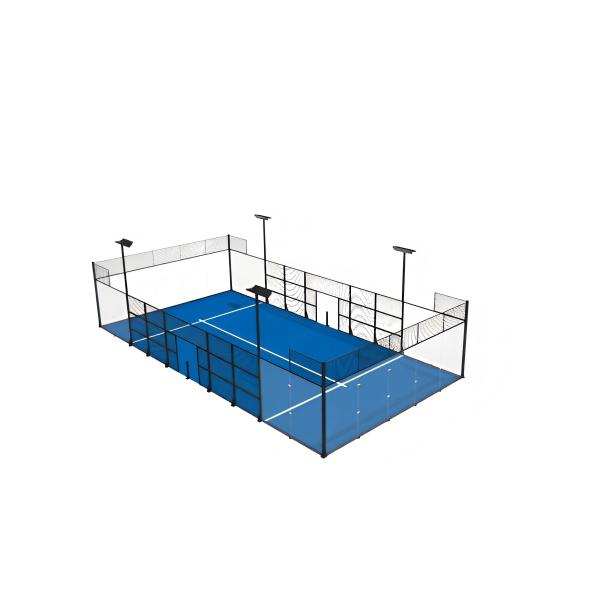
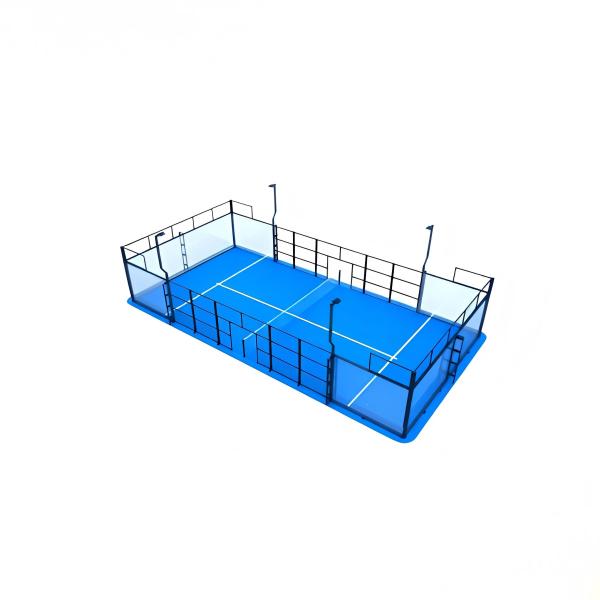
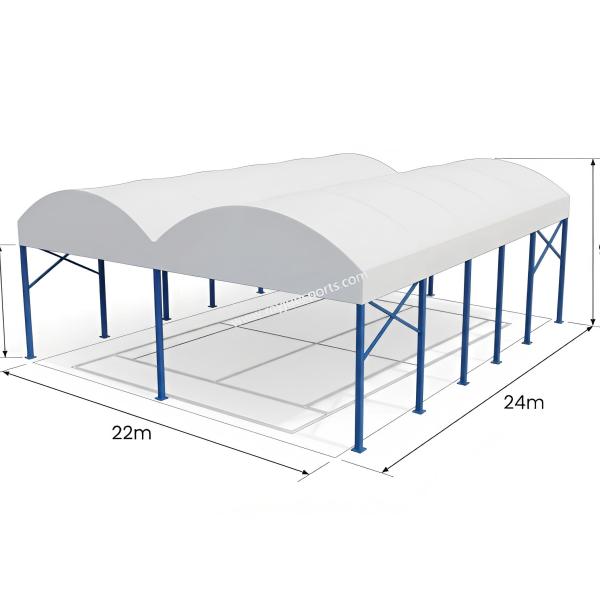
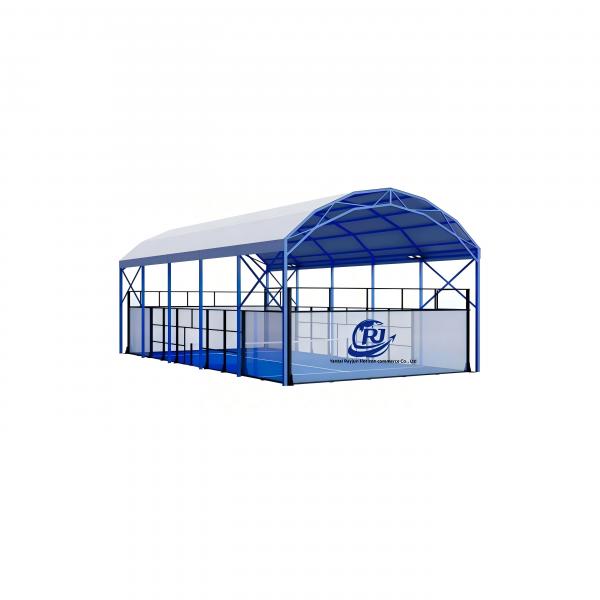
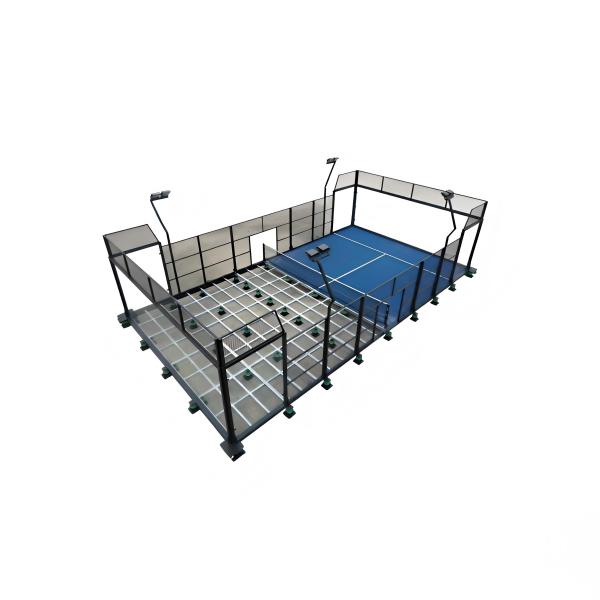
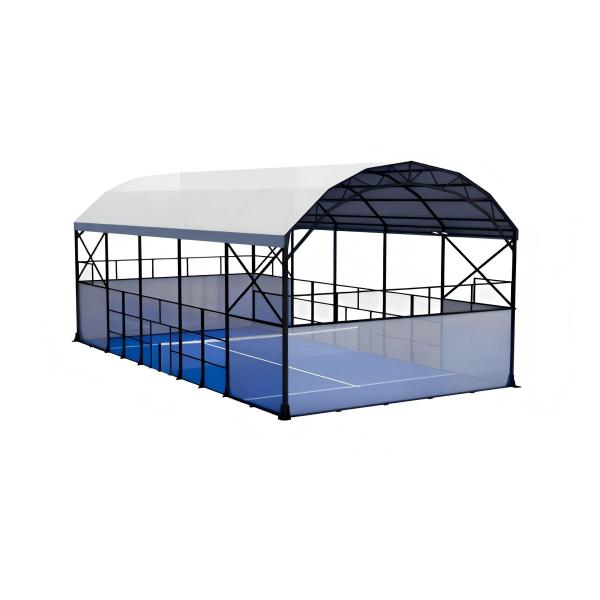
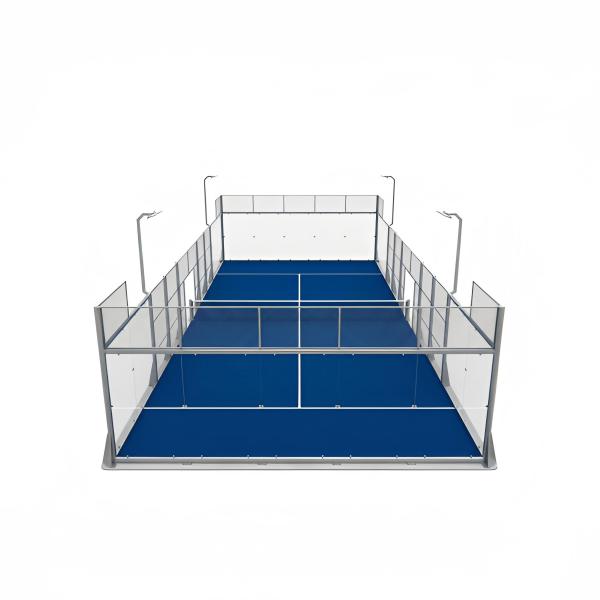
A foundation-free padel court can be a practical option for sports clubs, hotels, rooftop venues, temporary facilities, and commercial sites where constructing a new concrete foundation is difficult, restricted, or inconsistent with the project plan. By using an engineered modular steel platform, this type of court can reduce dependence on conventional concrete foundation work and provide greater flexibility for certain installations.
However, a foundation-free padel court is not automatically the best choice for every site. Ground conditions, load-bearing capacity, wind exposure, drainage, installation restrictions, and the expected service life must all be considered before placing an order.
Rayjun Sports offers a Foundation-Free Platform Padel Court designed for projects that need an alternative to a newly constructed concrete foundation. The following guide explains when this solution makes sense, what site conditions to evaluate, and what to confirm before purchasing.
1. When Is a Foundation-Free Padel Court the Best Choice?
The strongest reason to consider a foundation-free padel court is a site constraint that makes conventional foundation construction difficult or undesirable. The decision should be based on the actual installation conditions rather than the assumption that every project can avoid civil engineering work.
Rooftop Sports Facilities
Rooftops can offer valuable space for sports and recreation, particularly at hotels, commercial buildings, residential developments, and existing sports facilities.
A foundation-free platform may be worth evaluating when the building owner wants to avoid drilling into the existing roof structure or constructing a new concrete base. It can also help projects explore underused rooftop space without automatically committing to conventional ground-level construction.
Before selecting a rooftop installation, a qualified structural engineer must verify the building's load-bearing capacity, the proposed platform's load distribution, wind forces, waterproofing, drainage, and access for transporting equipment. A foundation-free design does not eliminate these engineering requirements.
Leased Commercial Properties
A sports club operating on leased land may not be permitted to construct permanent concrete foundations or make substantial changes to the property.
In this situation, a modular platform can offer an alternative that may be easier to dismantle or relocate, depending on the design and site conditions.
Before investing, confirm the landlord's requirements, the permitted installation period, dismantling arrangements, and responsibility for restoring the property when the lease ends.
Temporary Events and Pop-Up Padel Venues
Exhibitions, promotional events, temporary sports facilities, and seasonal commercial projects may require a court that can be installed and removed within a defined period.
A foundation-free system may reduce the need for permanent civil works and support a more flexible project plan. The actual installation time depends on site preparation, platform assembly, glass handling, turf installation, electrical work, and the installation team's capabilities.
For event-based applications, confirm the expected operating duration, installation deadline, dismantling plan, storage requirements, and transportation costs before choosing the system.
Existing Sites Where Drilling Is Restricted
Some indoor venues, commercial floors, paved areas, and renovated properties restrict drilling because of waterproofing systems, underground utilities, embedded services, or the property owner's requirements.
A foundation-free platform may be suitable when the existing surface can safely support the proposed structure and the complete installation meets the relevant engineering requirements.
The restriction on drilling should be documented before the court is specified. The supplier and project engineer must then determine whether the proposed platform can be installed safely without damaging the existing surface.
Hotels, Resorts, and Multi-Use Developments
Hotels, resorts, and mixed-use developments may want to add padel facilities to an existing recreational area without undertaking extensive permanent construction.
A foundation-free court can be considered when the project needs installation flexibility, limited disruption, or the possibility of relocating the facility in the future.
The decision should also account for guest access, noise, lighting, surrounding activities, maintenance access, and the intended commercial use of the court.
2. Foundation-Free vs. Traditional Padel Court Foundations
The two approaches serve different project requirements. A conventional foundation may be more appropriate for a permanent outdoor facility, while a foundation-free platform may offer advantages when the site has restrictions or the project requires greater flexibility.
| Evaluation Factor | Foundation-Free Platform Court | Conventional Foundation Court |
|---|---|---|
| Concrete Construction | Can avoid constructing a new concrete foundation when the design and site permit | Normally requires an engineered concrete foundation or other specified permanent base |
| Existing Surface | Requires verification of surface condition and load-bearing capacity | Requires site preparation and foundation construction |
| Installation Planning | May reduce civil construction work | Includes foundation preparation, curing where applicable, and structural installation |
| Property Restrictions | Worth evaluating when permanent foundations or drilling are restricted | May be unsuitable where permanent construction is prohibited |
| Relocation | May support dismantling and relocation, depending on the system | Permanent foundations can make relocation more involved |
| Engineering Requirements | Still requires structural, load, stability, and site assessment | Requires foundation and structural design for the site |
| Initial Project Cost | May reduce some civil work, but platform and engineering costs must be included | Includes foundation work, drainage, and associated construction costs |
| Long-Term Permanent Use | Depends on platform design, site conditions, and maintenance requirements | Often suitable for permanent facilities when properly engineered |
A foundation-free system should not be selected on the assumption that it is always cheaper. The relevant comparison is the total installed cost, including the court structure, platform, site preparation, engineering, transportation, installation, electrical work, and any required approvals.
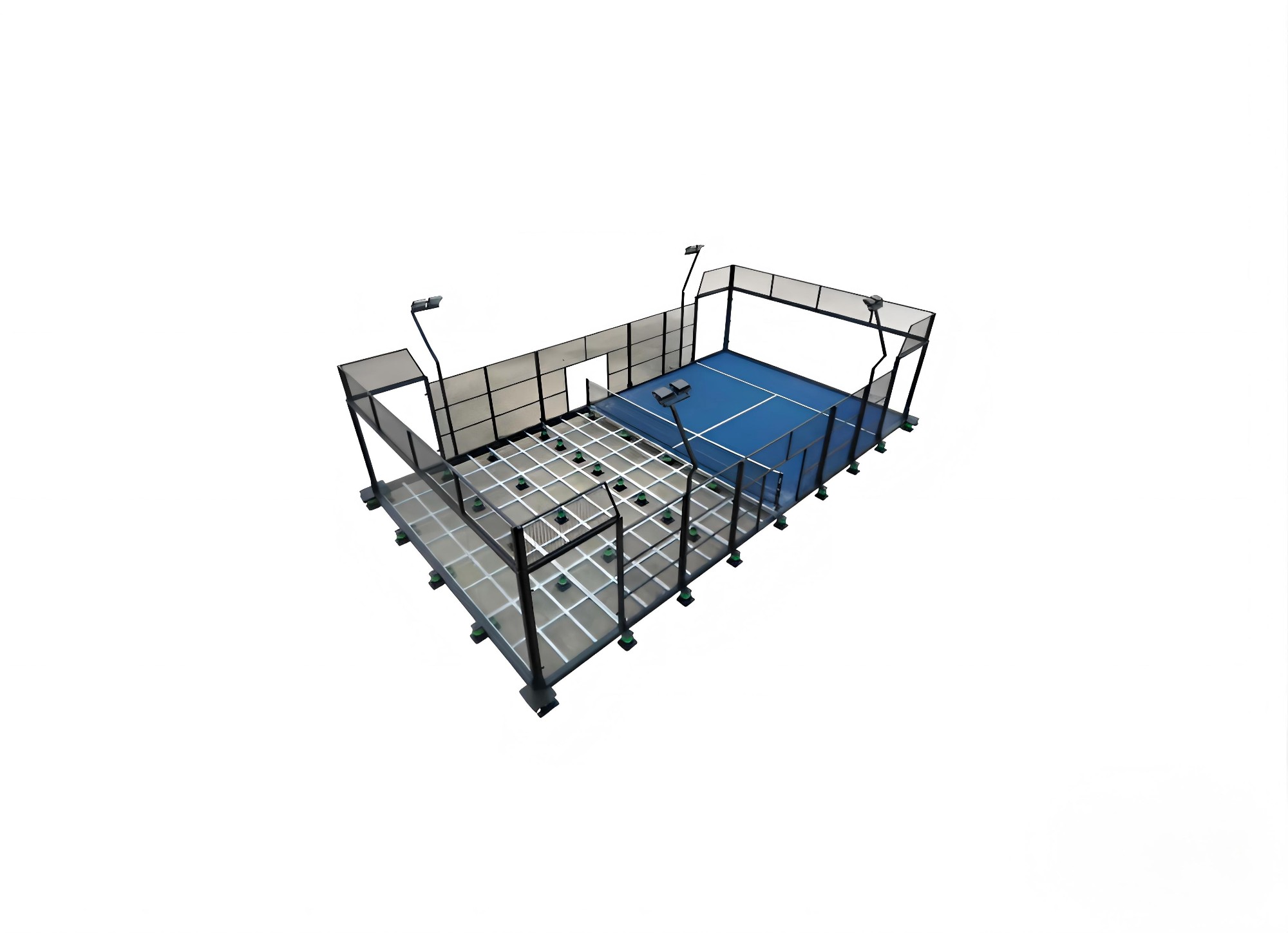
3. What Site Conditions Must Be Checked Before Ordering?
Avoiding a new concrete foundation does not mean the court can be placed on any surface. The existing site must be suitable for the loads and forces generated by the complete court system.
Ground or Floor Load-Bearing Capacity
The supporting surface must be capable of carrying the platform, steel structure, glass panels, turf, equipment, and other relevant loads.
For rooftop projects, the building structure must be assessed by a qualified structural engineer. For ground-level installations, the condition and capacity of the existing surface should be verified rather than assumed.
Provide the supplier with available structural drawings, site information, and photographs during the initial feasibility review.
Surface Level and Stability
An uneven or unstable surface can affect platform alignment, structural assembly, glass installation, and playing-surface performance.
Check the existing surface for settlement, cracking, loose paving, local deformation, and other conditions that could affect stability. The permissible surface tolerances and any required preparation should be confirmed in the manufacturer's installation documentation.
Wind Exposure and Structural Stability
Outdoor padel courts contain steel framing, mesh panels, and glass elements that are exposed to wind loads. Rooftops and open sites can experience particularly demanding conditions.
The complete court and platform system must be assessed for the local wind environment and applicable structural requirements. Confirm the design assumptions, permitted installation conditions, anchoring or restraint arrangements, and any restrictions on use.
Do not assume that the absence of conventional concrete foundations removes the need for wind-load engineering.
Drainage and Weather Exposure
For outdoor installations, consider rainfall, surface water, drainage routes, and the effect of water on the supporting surface and surrounding area.
A platform system does not automatically solve poor drainage. The site must still provide appropriate water management, and the installation should not obstruct existing drainage paths.
For rooftop installations, verify waterproofing protection and drainage arrangements before equipment is delivered.
Access and Installation Space
The installation team needs sufficient access to move platform components, steel structures, glass panels, turf, and equipment into position.
Check delivery vehicle access, lifting requirements, doorway dimensions, overhead restrictions, working space, and the route used to transport glass safely.
These factors can affect installation cost and schedule even when concrete construction is not required.
4. When Is a Foundation-Free Padel Court Not the Right Choice?
A foundation-free platform should be considered only when its engineering design and installation requirements match the actual site.
The Existing Surface Cannot Support the Proposed Loads
If the floor, roof, or ground cannot support the platform and court structure, the project requires further engineering assessment or a different installation solution.
Do not use a foundation-free system to bypass an unresolved structural limitation.
The Site Has Significant Settlement or Stability Problems
Loose ground, uneven paving, unstable fill, or a deteriorating existing surface can create problems for platform alignment and long-term performance.
The underlying cause must be addressed before installation. Depending on the site, additional ground preparation or a different foundation design may be necessary.
Permanent Outdoor Use Requires a Different Engineered Solution
For a permanent outdoor club with suitable land and permission for construction, a conventional foundation may be more appropriate.
The decision should compare the long-term requirements of the facility, site conditions, structural design, drainage, maintenance, and total ownership cost. Neither foundation type should be treated as universally superior.
Local Regulations or Property Rules Do Not Permit the Proposed Installation
Even when a court does not require a newly constructed concrete foundation, local building requirements, planning rules, rooftop restrictions, fire access, or landlord conditions may still apply.
Confirm the applicable approvals before manufacturing or shipping the court.
5. How Does a Foundation-Free Padel Court Affect Project Cost?
The financial benefit of a foundation-free court depends on which construction activities can actually be avoided.
For a suitable existing site, eliminating a new concrete foundation may reduce expenditure on excavation, reinforcement, concrete, curing, and associated civil work. However, these potential savings must be compared with the cost of the engineered platform and any additional site requirements.
| Cost Item | What to Confirm |
|---|---|
| Court Structure | Steel frame, glass, mesh, doors, and structural components |
| Platform System | Platform dimensions, material specifications, and included components |
| Site Preparation | Leveling, surface repairs, load assessment, and any required reinforcement |
| Engineering | Structural calculations, site review, and applicable professional services |
| Transportation | Shipping, unloading, lifting equipment, and access restrictions |
| Installation | Platform assembly, glass installation, turf installation, and labor |
| Electrical Work | Lighting, cabling, control equipment, and applicable installation requirements |
| Drainage and Protection | Surface water management, waterproofing protection, or other site-specific measures |
| Relocation | Dismantling, transport, storage, and reinstallation where required |
When requesting a quotation, ask the supplier to distinguish the court package from platform components, site preparation, engineering, installation, and other project costs.
This makes it easier to compare a foundation-free option with a conventional installation on a like-for-like basis.
6. Foundation-Free Padel Court for Temporary vs. Long-Term Projects
The expected operating period is an important factor in deciding whether a foundation-free platform is appropriate.
Temporary Projects
For temporary venues, the main considerations include the installation deadline, operating period, removal procedure, storage, and future site use.
A foundation-free system may be attractive when the project needs to avoid permanent construction or when the court is intended to be relocated after an event or seasonal operating period.
Before ordering, confirm how the platform is dismantled, which components can be reused, and whether the next site will require a different engineering assessment.
Long-Term Commercial Facilities
A long-term installation requires consideration of durability, maintenance access, corrosion protection, structural performance, and the expected service environment.
A foundation-free platform may still be suitable for a permanent commercial venue if the system is specifically designed for the intended use and the site assessment supports it.
However, the project should not rely on future relocation as a substitute for a proper initial design. The complete system must satisfy the applicable structural and operational requirements for its intended service life.
7. What Should You Ask a Supplier Before Buying?
Before selecting a foundation-free padel court, request technical information that allows your engineering team and project stakeholders to assess feasibility.
● Platform drawings: What are the overall dimensions, support arrangement, and installation requirements?
● Load information: What loads does the platform transfer to the existing surface, and what site information is required for engineering review?
● Wind design: Which wind conditions and structural assumptions apply to the proposed configuration?
● Surface requirements: What levelness, bearing capacity, and surface condition are required before installation?
● Installation method: What equipment, personnel, access, and site preparation are needed?
● Relocation procedure: Can the system be dismantled, transported, and reassembled? Which components need inspection or replacement?
● Weather protection: What corrosion protection and drainage considerations apply to the intended environment?
● Project scope: Which items are included in the quotation, and which require separate contractors or local engineering services?
● Documentation: Can the supplier provide installation instructions, relevant technical drawings, and available structural documentation for the selected system?
These questions help identify whether the proposed court fits the site before the project commits to manufacturing and delivery.
8. Why Consider Rayjun Sports for a Foundation-Free Padel Court?
Rayjun Sports supplies different padel court configurations, including panoramic courts, wind-resistant courts, temporary or relocatable courts, and foundation-free platform courts.
Its Foundation-Free Platform Padel Court is intended for projects where a new concrete foundation is not the preferred installation approach.
For commercial clubs, rooftop venues, hotels, and temporary facilities, the appropriate configuration should be evaluated against the site dimensions, existing surface, local wind conditions, access restrictions, and intended operating period.
Rayjun Sports can be contacted to discuss the required court configuration and project information. Before confirming an order, request the applicable drawings, installation requirements, structural information, and quotation scope for your specific site.
Frequently Asked Questions
Does a foundation-free padel court require no site preparation?
Not necessarily. The system may eliminate the need for a newly constructed concrete foundation, but the existing surface must still meet the specified levelness, load-bearing, stability, and drainage requirements. Additional preparation may be needed depending on the site.
Can a foundation-free padel court be installed on a rooftop?
Potentially, provided the building structure and proposed platform are assessed and approved for the intended installation. A qualified structural engineer must verify load capacity, wind forces, waterproofing, drainage, and other relevant requirements.
Is a foundation-free padel court cheaper than a traditional court?
It may reduce certain civil construction costs when the site is suitable. However, the platform, engineering, site preparation, transportation, and installation costs must be included in the comparison.
Can a foundation-free padel court be relocated?
Relocation may be possible depending on the platform design and manufacturer instructions. Confirm dismantling procedures, component reuse, transport requirements, and the engineering suitability of the new site.
Is a foundation-free court suitable for permanent outdoor use?
Suitability depends on the specific system, structural design, local wind conditions, site surface, drainage, and applicable regulations. Obtain confirmation that the proposed configuration is designed for the intended permanent outdoor application.
What information is needed for a foundation-free padel court quotation?
Provide the installation location, number of courts, site dimensions, photographs, existing surface details, intended use, local wind conditions, access restrictions, and preferred installation schedule. For rooftop projects, include available structural drawings and information about the building's load capacity.
Request a Foundation-Free Padel Court Assessment
A foundation-free padel court is most useful when it solves a genuine site or construction constraint without compromising structural safety, playing conditions, or long-term operating requirements.
If your project involves a rooftop, leased property, temporary venue, or existing paved area, share the site details with Rayjun Sports before choosing a configuration.
Send your location, site photographs, available drawings, required court quantity, and target installation date to discuss feasibility and obtain a project-specific quotation.
Contact Rayjun Sports to evaluate a foundation-free padel court for your next sports facility project.